Find a Kendra
Enter a focused community organized around a subject, source, teacher, tradition, place, or shared project.
Explore →

Connect through Kendra
Meet teachers, learners, families, lineages, institutions, and communities that preserve, question, practise, and carry knowledge forward.
Enter KendraWays to connect
Connect is organized around purposeful participation—not an endless social feed. Every entrance should make its subject, people, standards, and intended form of participation clear.
Enter a focused community organized around a subject, source, teacher, tradition, place, or shared project.
Explore →Understand who someone is, how they were trained, what they teach, and the context from which they speak.
Explore →Read, listen, discuss, recite, research, or practise with people following a clear purpose and shared source.
Explore →Discover temples, maṭhas, universities, archives, cultural organizations, and centres of living knowledge.
Explore →Find lectures, text studies, question sessions, performances, workshops, and community gatherings.
Explore →Share sources, translation, teaching, research, facilitation, cultural memory, or service.
Explore →What is a Kendra?
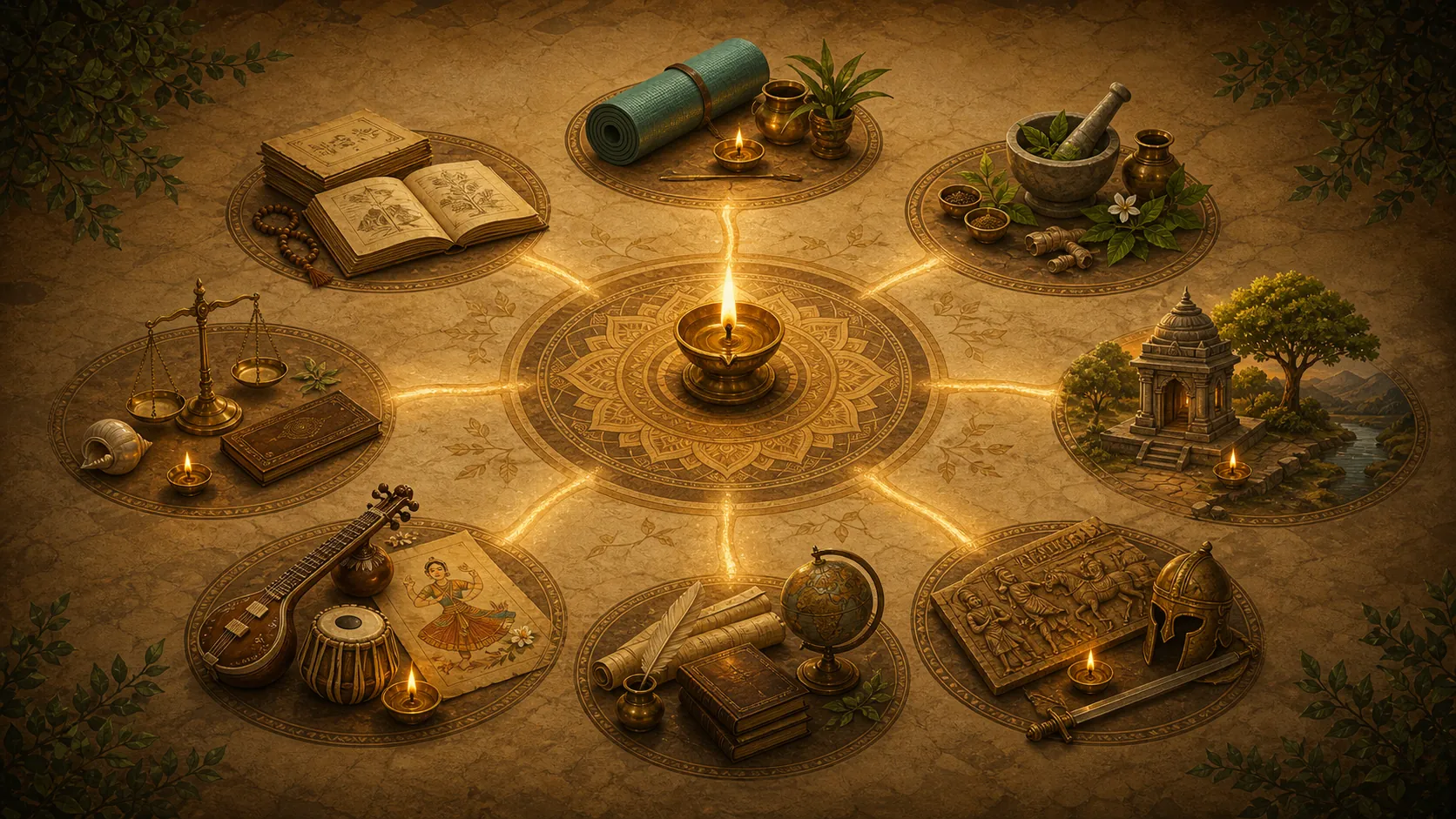
A Kendra is organized around a subject, source, teacher, tradition, practice, place, language, research question, family, or shared project.
Explore Kendras
Every Kendra identifies its purpose, level, language, sources, facilitators, participation model, and whether it is for study, practice, research, family, or public discussion.
Text study · Beginner to advanced
Language · All levels
Study and practice · Foundation
Knowledge system · Intermediate
Story and literature · All levels
Inquiry · Moderated
Teachers, scholars & knowledge keepers
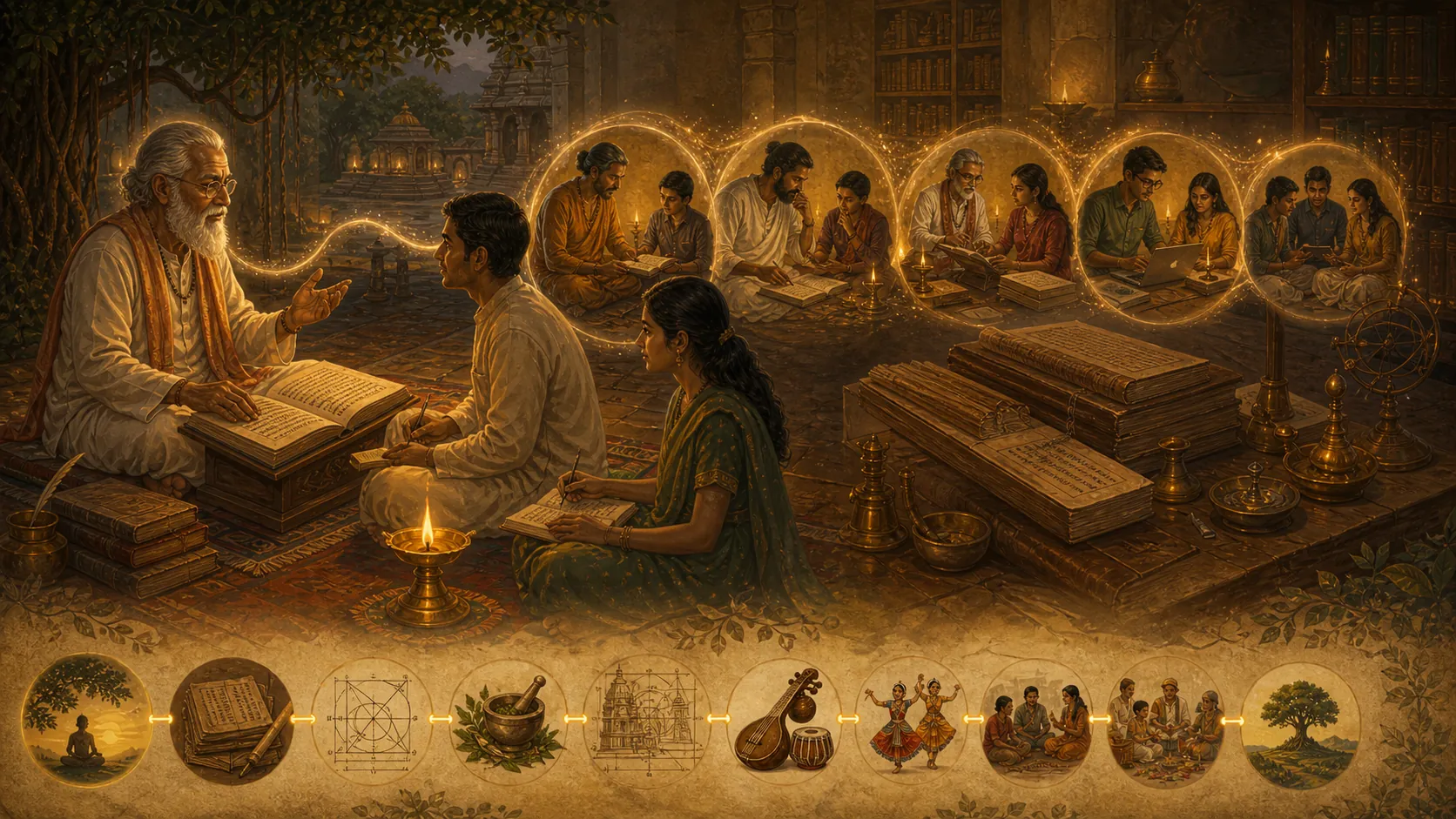
Profiles make training, lineage, affiliation, languages, publications, teaching, associated Kendras, and availability visible. Different roles are not treated as interchangeable.
Teach through a sampradāya, paramparā, śāstric discipline, or established practice lineage.
Contribute historical, textual, linguistic, philosophical, archaeological, or interdisciplinary research.
Carry disciplined practice, ritual knowledge, craft, medicine, place-based knowledge, or oral memory.
Transmit knowledge through music, dance, theatre, storytelling, visual art, and living performance traditions.
Interpret, translate, document, explain, and present knowledge through carefully attributed work.
Guide discussion, protect standards, welcome learners, and sustain a purposeful Kendra.
Study with others
A group should state its level, language, schedule, facilitator, sources, participation guidelines, and whether access is public, private, or application-based.
Institutions & places
Institution pages can present history, role, collections, programmes, lineages, publications, events, access, and provenance.
Teaching, recitation, discipline and residential or community learning.
Discover institutions →Worship, lineage, teaching, service, manuscripts and community continuity.
Discover institutions →Formal study, scholarship, archives, fieldwork, publications and public programmes.
Discover institutions →Preservation, cataloguing, digitisation, editions and access to source materials.
Discover institutions →Performance, pedagogy, repertoire, lineage, practice and cultural memory.
Discover institutions →Objects, exhibitions, documentation, programmes and public interpretation.
Discover institutions →Live sessions & events
Online and local · Registration in the app
Explore events ↗Curated by a Kendra · Source and facilitator visible
Explore events ↗Online and local · Registration in the app
Explore events ↗Curated by a Kendra · Source and facilitator visible
Explore events ↗Online and local · Registration in the app
Explore events ↗Curated by a Kendra · Source and facilitator visible
Explore events ↗Online and local · Registration in the app
Explore events ↗Curated by a Kendra · Source and facilitator visible
Explore events ↗From Ask to Kendra
Review existing source-grounded answers, find a relevant Kendra, submit the question, compare teacher and community perspectives, and add what you learn to a continuing pathway.
Begin with a questionBuild and contribute together
Kendra can produce learning, research, preservation, teaching, cultural work, and community contribution—not conversation alone.
Bring passages, translations, commentaries, provenance, and notes into a shared study object.
Contribute →Create carefully reviewed material for learners, families, teachers, and language communities.
Contribute →Organize questions, evidence, sources, perspectives, and findings into useful public artifacts.
Contribute →Document people, places, practices, stories, performance, and community knowledge with consent.
Contribute →Turn shared study into guided learning, public conversation, and deeper participation.
Contribute →Support archives, endangered knowledge, local traditions, manuscripts, arts, and community initiatives.
Contribute →Trust & community standards
Community trust depends on visible roles, source standards, respectful difference, transparent moderation, and safeguards proportionate to risk.
Members understand whether someone is teaching, facilitating, researching, practising, or sharing personal experience.
Claims, quotations, translations, images, and interpretations identify where they come from.
Sampradāya and Darśana differences remain visible without harassment, sectarian hostility, or manufactured consensus.
Medical, legal, financial, and other consequential claims receive appropriate limits and safeguards.
Rules, decisions, conflicts, appeals, sponsorship, and authority are not hidden from the community.
Children and teenagers participate only in age-appropriate, safeguarded spaces with suitable oversight.

Families & young learners
Parent-led Kendras, age-appropriate groups, story and language sessions, festival learning, youth questions, heritage projects, and grandparent–grandchild learning should never place young learners into unrestricted adult spaces.
Explore family KendrasContinue in the app
Follow Kendras, join discussions, attend sessions, ask teachers, share notes, collaborate on projects, discover institutions, and participate with clear roles and moderation.
Connect in Vidyame