Inherited narratives embodied anew
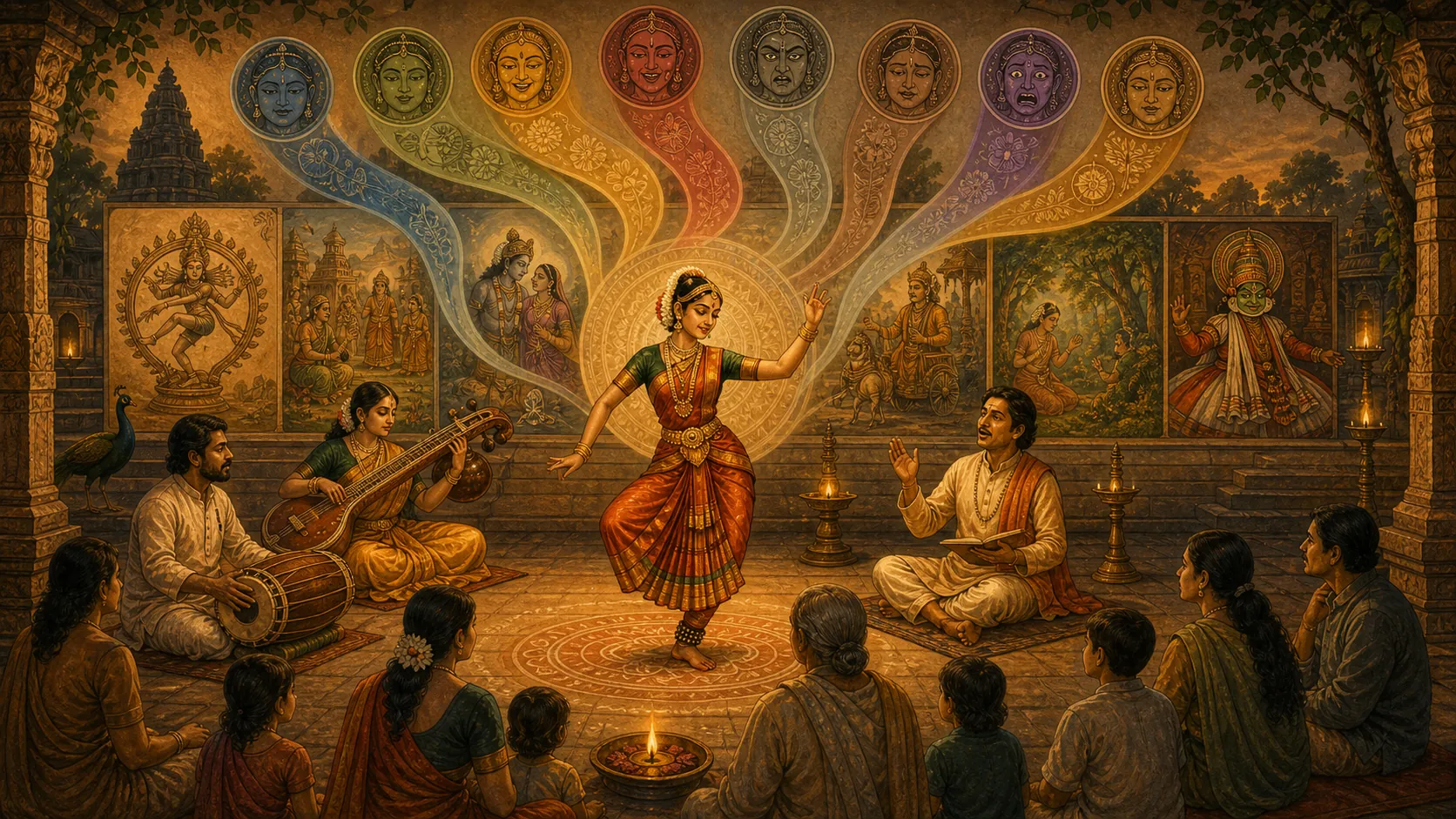
Story in performance
Follow how source narratives and literary works are adapted through kathā, theatre, puppetry, dance, recitation, and regional performance.
- Kathā
- Harikathā
- Puppetry
- Theatre

09
Civilization embodied, pictured and performed
Enter the civilizational imagination through music, dance, theatre, oral performance, sculpture, painting, craft, temple arts, cinema, and the adaptation of inherited stories.
Explore this fieldHow to enter
Art is treated as a knowledge form—not decoration or a substitute for Literature. Vidyame identifies source, artist, lineage, region, medium, performance context, adaptation, and interpretive choice.
Explore the field
Choose an entrance, then follow its sources, terms, people, places, practices, and connected questions.
Inherited narratives embodied anew
Follow how source narratives and literary works are adapted through kathā, theatre, puppetry, dance, recitation, and regional performance.
How art creates experience
Explore rasa, bhāva, abhinaya, dhvani, gesture, rhythm, staging, and the interpretive choices of performers and makers.
Knowledge carried in sound
Encounter rāga, tāla, composition, gharānā, bhajan, kīrtan, recitation, folk song, and performance lineages.
Meaning through gesture and movement
Explore Nāṭyaśāstra categories, regional forms, abhinaya, repertoire, pedagogy, temple and stage histories.
Form as a mode of knowing
Read iconography, proportion, material, craft lineage, architecture, painting, textile, and ritual setting.
Tradition continually retold
Meet puppetry, mural, theatre, oral epic, festival arts, print, photography, cinema, digital forms, and new interpretations.
Questions people bring
Each answer should lead back to sources, named interpretations, and related pathways—not stop at a summary.
Guided pathways
Start with a shaped journey. Each pathway brings together sources, explanation, media, reflection, and related fields.
Move through source, regional retelling, dance, theatre, painting, music, and cinema.
Follow in the Vidyame app →Understand aesthetic experience across poetry, drama, music, dance, and visual art.
Follow in the Vidyame app →Connect repertoire, teacher, lineage, region, audience, and contemporary change.
Follow in the Vidyame app →The Vidyame Promise
Art is treated as a knowledge form—not decoration or a substitute for Literature. Vidyame identifies source, artist, lineage, region, medium, performance context, adaptation, and interpretive choice.
How Vidyame approaches sourcesContinue discovering